
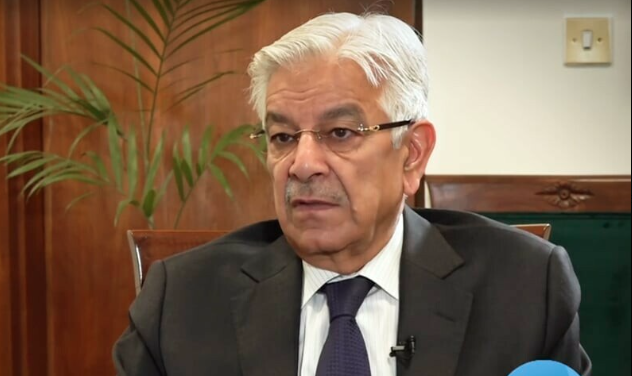
In a rare and explosive admission, Pakistan’s Defence Minister Khawaja Asif publicly acknowledged that his country had supported, trained, and funded terrorist organizations — a policy he admitted was part of executing the “dirty work” of Western powers.
Speaking during an interview broadcast yesterday, Asif revealed that Pakistan’s involvement with militant groups was not purely for its own strategic interests but was heavily influenced by international pressures, particularly during the Cold War and in the post-9/11 landscape.
“We did the West’s dirty work. We supported them, trained them, and armed them. In the end, we were left to deal with the consequences alone,” Asif said, reflecting a rare moment of candor from a senior Pakistani official.
The admission directly vindicates India’s long-standing claims that Pakistan’s so-called “strategic depth” policy in Afghanistan and its proxy war in Kashmir were not merely internal choices but part of a broader network of state-sponsored terrorism, often overlooked by global powers for geopolitical convenience.
Asif did not name specific groups, but his comments are being seen as a tacit acknowledgment of Pakistan’s historical patronage of outfits like the Taliban, Haqqani Network, and various groups operating against India. His statement underscores the deep-rooted nexus between Pakistan’s security establishment and militant organizations, a reality India has persistently raised at international forums.
“While the West may have used Pakistan as a pawn, it is the people of South Asia — particularly in India and Afghanistan — who have borne the real cost of this ‘dirty work,'” a senior Indian official told this newspaper on condition of anonymity.
Khawaja Asif also lamented that after these militant proxies were no longer needed, Pakistan was abandoned by its Western allies, left to grapple with the blowback of radicalization and internal instability. Yet, for India, this belated admission is too little, too late.
Political experts in New Delhi suggest Asif’s remarks could sharpen international scrutiny on Pakistan at a time when Islamabad is trying to rehabilitate its global image. They also highlight the need for stronger international mechanisms to hold nations accountable for fostering terrorism under the guise of geopolitical strategy.
With Pakistan’s Defence Minister now publicly admitting to policies that India has long condemned, the world must confront difficult questions: How much global instability was born out of these covert deals, and what justice is owed to the victims?












Leave a Comment
Your email address will not be published. Required fields are marked with *