
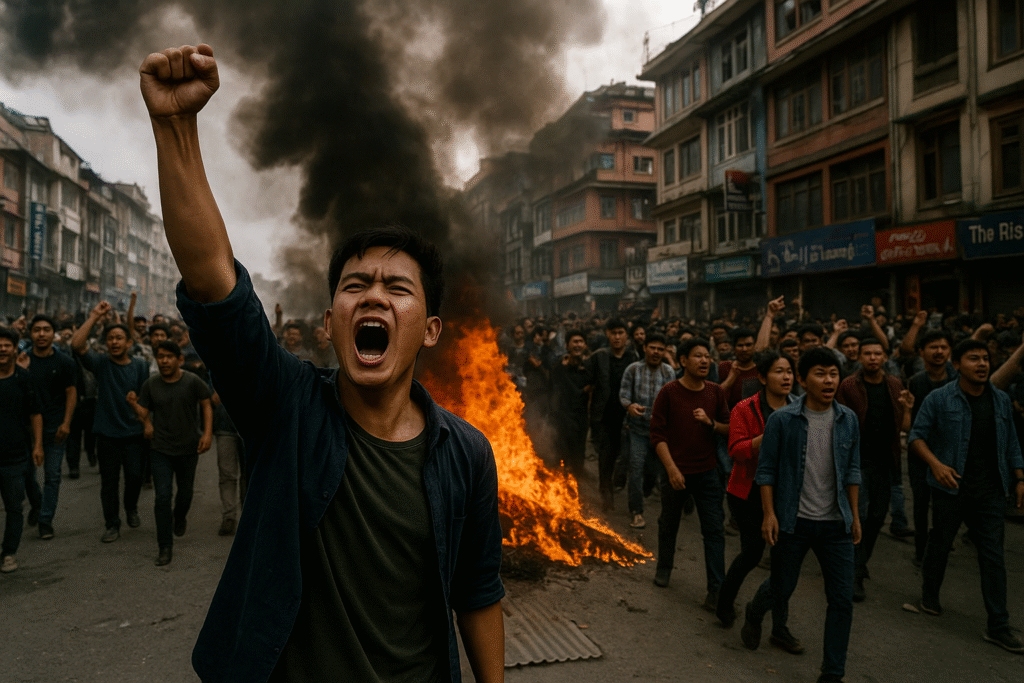
Nestled in the lap of the Himalayas, Nepal has long been known as the land of peace and the home of Buddha—where sunlight breaks through the mist to paint golden hues on the mountain peaks. For centuries, temples, festivals, folk songs, and the mountain lifestyle stood as witnesses to the country’s proud heritage. But today, that land of serenity has turned restless. Beneath the Himalayas, the voices of the youth have erupted, overshadowing the glory of the past with the fury of the present.
The once-peaceful valleys now echo with the cries of a new generation. For years, Gen-Z in Nepal had been vocal on social media against corruption, unemployment, and nepotism. Through Facebook, YouTube, Instagram, and X (Twitter), they exposed one case after another of corruption and abuse of power, using videos, memes, and livestreams.
But on September 4, when the government suddenly banned social media platforms, the simmering anger exploded like fire on fuel. The protests, which began in the capital Kathmandu, quickly spread to Pokhara, Biratnagar, Dharan, Dang, and Inaruwa. Government offices, party headquarters, and even the lavish residences of political leaders were set ablaze by furious demonstrators.
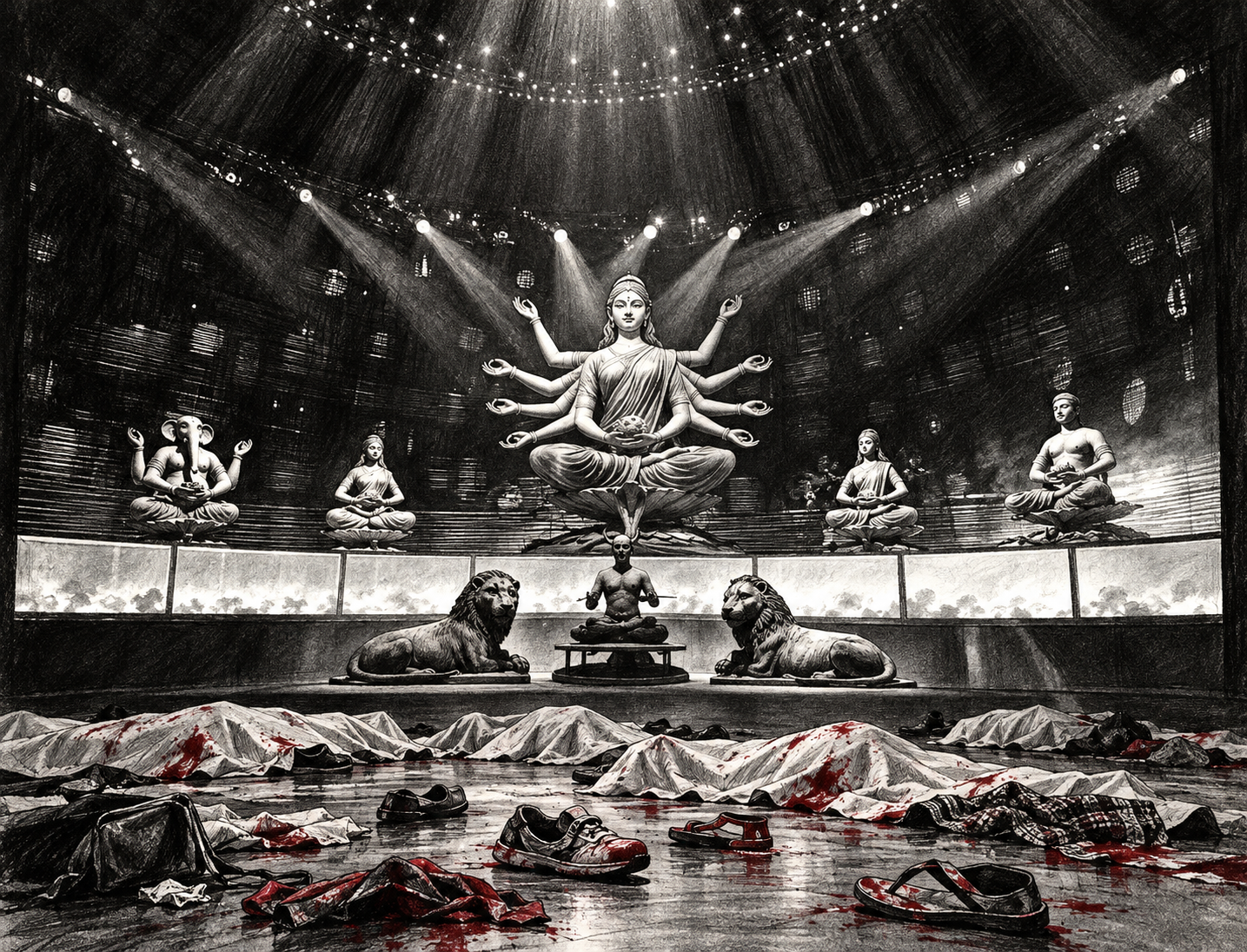
On September 8 and 9, the movement turned violent. Clashes with security forces left at least 20 people dead and hundreds injured. To restore order, the army was deployed on the streets, and a nationwide curfew was declared. Kathmandu’s Tribhuvan International Airport was temporarily shut down, forcing many international flights to divert to India’s Delhi and Lucknow.
Amid mounting public pressure, Prime Minister K. P. Sharma Oli resigned on September 9. Yet, the resignation has failed to bring calm. The military continues to patrol the streets, and round-the-clock curfews remain in place.
Why this uprising?
The youth argue that Nepal’s democracy exists only on paper:
- Government positions are reserved for the children of political families.
- Ordinary young people are denied opportunities, forcing many to migrate abroad for work.
- Public funds and foreign aid are squandered on half-built bridges and “ghost projects” that exist only on paper.
- When Gen-Z tried to expose these issues through social media, the government silenced them by banning the platforms.
Current situation
Nepal now stands on the edge of uncertainty. The shadow of military rule looms large, yet the anger of the youth remains unquenched. Foreign governments have issued warnings for their citizens’ safety. And in the once-peaceful land of the Himalayas, a single question reverberates:
Will this uprising give birth to a new Nepal—or drag the nation deeper into crisis?










Leave a Comment
Your email address will not be published. Required fields are marked with *