
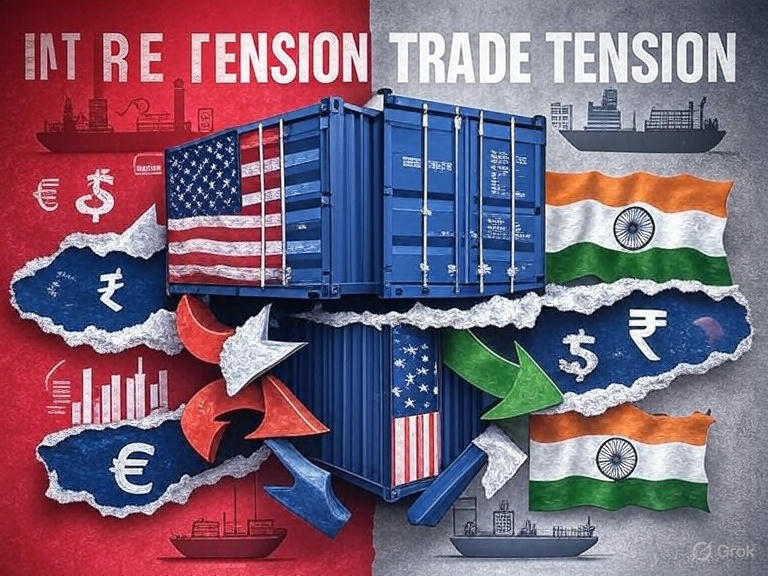
In a dramatic escalation of trade tensions, U.S. President Donald J. Trump has announced a sweeping 50% tariff on key imports from India, sparking sharp criticism from New Delhi and raising concerns across global markets. The announcement was made during a campaign rally in Ohio, where President Trump accused India of taking unfair advantage of the United States for decades. He stated that the move was necessary to protect American workers and industries, reinforcing his administration’s continued commitment to the “America First” policy.
The newly imposed tariffs primarily target Indian goods such as textiles, generic pharmaceuticals, automobile components, and electronics—sectors that constitute a major portion of India’s annual exports to the U.S., which exceed $78 billion. Experts warn that this aggressive tariff hike could significantly disrupt India’s export economy, particularly affecting small and medium-sized enterprises that rely heavily on American markets.
India reacted strongly to the move. In a formal statement, the Ministry of External Affairs condemned the decision, calling it arbitrary, protectionist, and a serious setback to the economic relationship between the two countries. Indian officials have indicated that retaliatory tariffs on American products, including agricultural goods and high-end motorcycles, are being considered. New Delhi also signaled that it may explore legal options through the World Trade Organization if diplomatic efforts fail to resolve the dispute.
Meanwhile, the American business community has voiced concerns over the potential fallout. U.S. pharmaceutical companies and technology firms, which depend on affordable Indian imports, warned that the tariffs could lead to rising production costs and supply chain disruptions. Healthcare groups in particular fear that the increased costs of generic drugs may eventually be passed on to American patients.
Global markets responded with caution. Both the Indian Sensex and the U.S. Nasdaq saw mild declines, reflecting investor anxiety over a potential trade war between two of the world’s largest democracies. The development also casts a shadow over the growing strategic and defense partnership between Washington and New Delhi, particularly in the Indo-Pacific region where both nations have been aligning interests to counterbalance China.
As the situation unfolds, trade officials from both sides are expected to enter high-level discussions in an effort to defuse tensions. However, with political stakes high and nationalistic rhetoric intensifying on both fronts, the path to resolution may be far from straightforward. For now, the 50% tariff stands as a powerful symbol of renewed protectionism in U.S. trade policy and a serious test for U.S.-India relations in the coming months.
Image Created By AI Grok













Leave a Comment
Your email address will not be published. Required fields are marked with *